
Global Turbulence
Making Sense of an Upside Down World
September/October 2026
This event is offered in-person* and livestream
(and will be recorded)
1 Thursday and 5 Tuesday afternoons 1:30 – 3:30
What is happening around the world right now?
How does it affect Canada?
How should we be responding in this country?
This fall, Third Age Barrie invites you to take a trip around the world to better understand the challenges we face.
- How do we maintain our sovereignty as a country?
- What is happening in Iran and how did we get here?
- What role has Canada played in Latin America and what role can it play in the future?
- Why is Taiwan important to the state of democracy?
- What is the future of Canada and NATO under the current and future American presidents?
- How do shrinking foreign aid budgets affect global health?
Six distinguished speakers. Six fascinating perspectives . .
Reclaiming Canadian Sovereignty in a Ruptured World
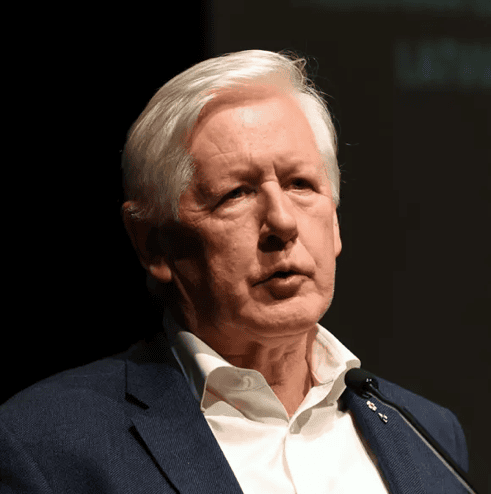
September 24: Bob Rae
Thursday, September 24, 2026 at 1:30 p.m.. Please note, the special date.
This talk will be presented in Grace United on Zoom. It will also be available to T.A.B. subscribers at home.
In a new book, diplomat, politician and author Bob Rae assembles the most thoughtful voices in Canada to explore the urgent questions about our country’s future, covering such topics as protecting our national sovereignty, shifting global alliances and the challenges of an increasingly unpredictable international climate.
As our relationship with the United States has become increasingly unpredictable, questions of Canada’s future have never been more pressing. What does the “ruptured” global order mean for Canada at home and abroad?
The Iran War and International Disorder
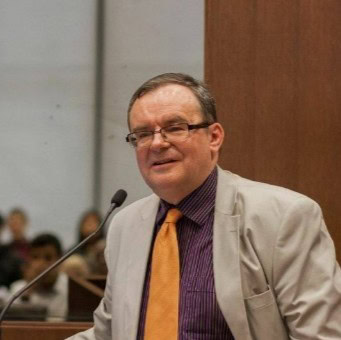
September 29: Jack Cunningham
Professor Cunningham’s talk will cover the long- and short-term causes, conduct, and likely consequences of the current conflict in Iran, beginning with an account of the coming to power of the current regime in Iran, its guiding ideology, and its strategy for regional hegemony, including its nuclear ambitions. The emergence of a Middle Eastern coalition to contain Iran will be discussed, along with Iranian efforts to disrupt it. The examination of the current conflict will consider the strategies of the parties, the conduct and results of their military operations, and the emergence of the current stalemate. It will close with analysis of how the conflict reflects the changing nature of warfare, and a discussion of its implications for the role of the United States in the world, both regional and global geopolitics, relations between Israel and its neighbours, and the global economy.
Canada’s Past and Future in Latin America: From Lost Chances to New Opportunities
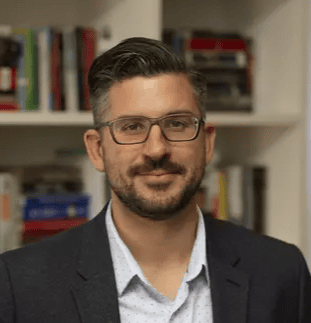
October 6: Donald Kingsbury
Professor Kingsbury’s talk will outline patterns and key events in Canada’s relatively short relationship with Latin America to draw lessons for our uncertain present and future. Starting from relative insignificance, for years Canada cultivated a reputation as the ‘nice neighbor’ in North America: a middle power oriented by humanitarianism, multilateralism, and respect for national sovereignty. However, since the turn of the 21st century, Canada has increasingly pursued a foreign policy that promotes mining interests and economic reforms, souring its reputation in the region. Professor Kingsbury will argue that the turbulence for hemispheric and global politics brought by Trump’s second term as president of the United States presents both Canada and Latin America with new challenges and opportunities for political, social, and economic realignment.
Taiwan, Canada and the Global Democracy Project
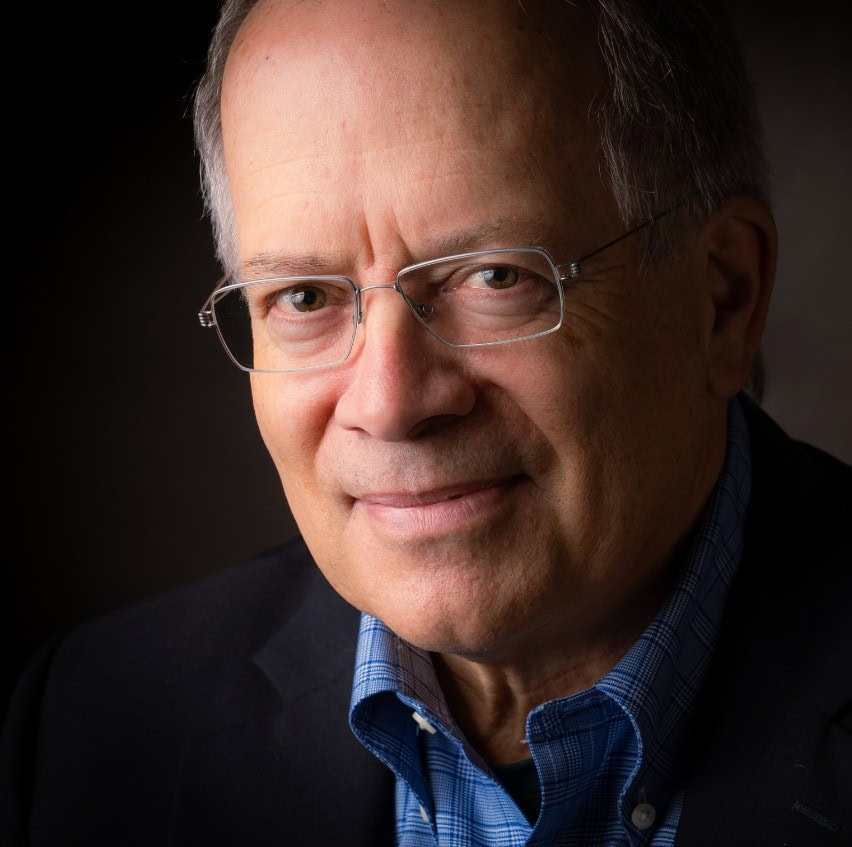
October 13: George Takach
Taiwan is a very important country that Canadians don’t know enough about. Taiwan is a first-rate democracy with a vibrant civil society that adheres to the rule of law; it has a population accepting of religious, gender and sexual diversity; it has a health care system that is the envy of Asia; it has a culture that fuses east and west; and it boasts 175 universities and colleges on an island smaller than Vancouver Island. In terms of strategic geopolitics, Taiwan is indispensable to the democracies because it produces over 90 % of the most advanced semiconductor chips used in the world, including the critical chips that run the most powerful artificial intelligence software in civilian and military applications. Unfortunately for Taiwan and the rest of the world, the autocracy in Beijing claims Taiwan to be part of China, and Xi Jingping threatens to take over the small island by military force if necessary. The Economist magazine has called Taiwan the most dangerous place in the world.
Schicksalsgemeinschaft: Why NATO’s European Allies Are Key to Defending Canadian Sovereignty
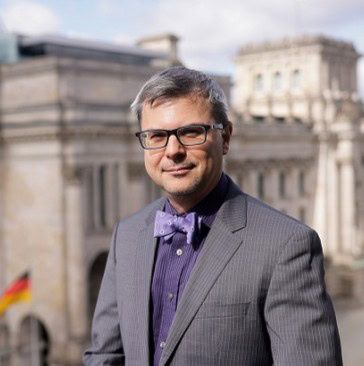
October 20: Christian Leuprecht
Christian Leuprecht, one of Canada’s leading military historians and current affairs commentators, will discuss these rapidly changing times internationally and how the NATO defence alliance is changing, along with Canada’s role in it.
Unraveling Progress? Global Health in a Changing Aid Landscape
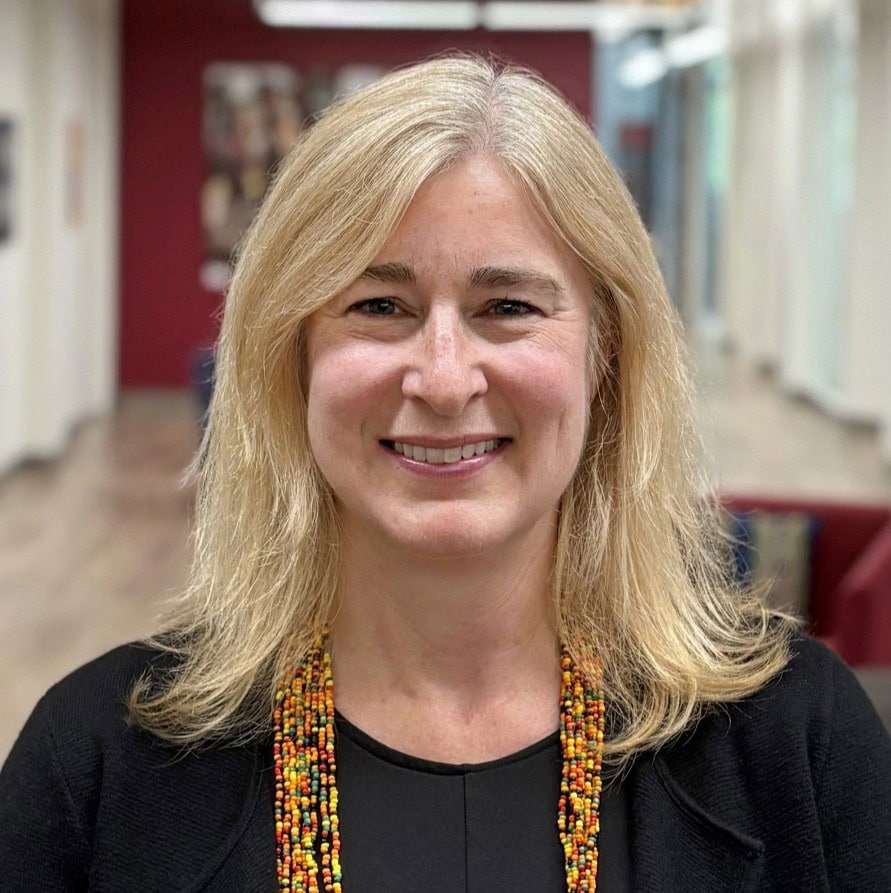
October 27: Meg French
In a rapidly changing world, the landscape of foreign aid in Africa is shifting in ways that will shape millions of lives. Over the past decades, the global HIV response has achieved extraordinary progress: new transmissions and deaths have fallen sharply, and millions of people are alive today because of access to treatment and care. These gains were driven by communities, activists and frontline health workers who refused to accept loss as inevitable. But this progress is now under threat. Deep cuts to global health funding are forcing programs to close, shrinking prevention efforts, and pushing the most marginalized communities further from care.
Meg French will reflect on what has been achieved, what is now at risk, and what responsibility Canadians carry in this moment. It is a call to stand with communities and to protect the progress they have fought so hard to win.
Speakers
-
Bob Rae
Bob Rae has been deeply engaged in a full range of public policy issues at the international, national, and provincial levels of government throughout a career that stretches for more than half a century.
He now serves as The Visitor of Massey College, a Distinguished Fellow of the Munk School at the University of Toronto, a Matthews Fellow in Public Policy at Queen”s University and consults and speaks widely on issues of global affairs and public policy. He is the Chairman Emeritus of the Royal Conservatory of Music.
Most recently he served as the Ambassador and Permanent Representative of Canada to the United Nations in New York from 2020-2025, including a term as President of the Economic and Social Council.
Mr Rae was Premier of Ontario from 1990-1995, and interim Leader of the Liberal Party of Canada from 2011-2013. He was elected to federal and provincial parliaments 11 times between 1978 and 2013.
He led the restructuring of the Canadian Red Cross, the Toronto Symphony Orchestra, and chaired the board of the Royal Conservatory of Music. He also wrote “Lessons to be Learned” on the Air India bombing, and “Ontario a Leader in Learning” – a study of the Ontario higher education system.
The author of nine books and reports, Bob Rae is a Privy Councillor, a Companion of the Order of Canada, a member of the Order of Ontario. He is married to Arlene Perly Rae, a writer and public advocate on issues affecting women and children. They have three daughters and six grandchildren.
-
Donald Kingsbury
Donald Kingsbury is an Associate Professor in Political Science and Latin American Studies at the University of Toronto and the former Vice President of the Canadian Association of Latin American and Caribbean Studies. Don’s research focuses on the social, environmental, and political consequences of resource extraction in the Americas, with an emphasis on critical minerals necessary for energy transitions and decarbonization.
-
Dr. Christian Leuprecht
Christian Leuprecht (Ph.D. Queen’s) is an award-winning Professor at the Royal Military College of Canada and Editor-in-Chief of the Canadian Military Journal, Associate Director of the Institute of Intergovernmental Relations in the School of Policy Studies at Queen’s University, a senior fellow at the Macdonald Laurier Institute, Adjunct Research Professor in the Australian Graduate School of Policing and Security at Charles Sturt University and Senior Research Associate at the Wilfried Martens Centre for European Studies, in Brussels. He is currently a fellow at the Konrad Adenauer Foundation in Berlin; he has previously held visiting fellowship at the Australian National University (2026), the Wilfried Martens Centre (2025), Germany’s Academy of International Affairs NRW (2022-2023), as Fulbright Research Chair in Canada–US Relations at John Hopkins University’s School for Advanced International Studies (2020), Eisenhower Fellow at the NATO Defence College (2019), Matthew Flinders Fellow at Flinders University of South Australia (2017-2018), and Bicentennial Professor in Canadian Studies at Yale University (2009-2010). He is an elected member of the College of New Scholars of the Royal Society of Canada and recipient of the Cowan Prize for Excellence in Research at the Royal Military College of Canada. His latest book is Military Operations in Response to Domestic Emergencies and Global Pandemics (Springer, 2025).
-
George Takach
George has undergrad and law degrees from the University of Toronto, and an MA from the Norman Paterson School of International Affairs. He practiced technology law for 35 + years as a partner at McCarthy Tétrault. During his legal career he was also an Adjunct Professor at Osgoode Hall Law School for 22 years, a columnist for Lexpert Magazine, and wrote three books on tech/law topics. Currently he is a Senior Fellow of the Bill Graham Centre for Contemporary History at the University of Toronto. George now writes books on technology and geopolitics for a general audience, including Cold War 2.0: Artificial Intelligence in the New Battle Between China, Russia and America, which was published in 2024 (the Chinese-language version of the book came out in 2025). His latest book is Inspired By Taiwan, published by Sutherland House Press.
-
Jack Cunningham
Dr. Jack Cunningham was Program Coordinator at the Bill Graham Centre for Contemporary International History from 2011 to 2026, as well as Assistant Professor in the International Relations Program at Trinity College in the University of Toronto. He has published on topics including Canada’s involvement in Afghanistan, the 2003 invasion of Iraq, Canadian nuclear history, and the 1998-1999 Kosovo War. He is a former editor of “International Journal” and a frequent commentator in print and broadcast media on international affairs.
-
Meg French
Meg is Executive Director of the Stephen Lewis Foundation, a progressive, feminist organization that partners with communities in Africa to end AIDS. Meg is a leader in global health and international development with more than 25 years of experience in Canada and internationally. She is a passionate advocate for human rights and believes strongly in partnership-driven and locally led approaches to development and social change.